Service Management Software: The Complete Guide for 2026
If your business delivers a service—rather than manufacturing a physical product and shipping it to a shelf—you are, by definition, a service business. This category is enormous, spanning industries from HVAC and plumbing to IT support, medical equipment repair, elevator maintenance, and commercial landscaping. Despite the diversity of these verticals, they all share the exact same operational DNA: a customer has a problem, a skilled technician travels to solve it, and the business bills for the resolution.
This shared operational model is precisely why service management software exists as a distinct product category. It is a purpose-built digital platform designed to orchestrate every workflow in this customer-to-technician-to-invoice lifecycle. In this comprehensive guide, we will define service management software, explore its core components, and help you understand why it is the highest-ROI investment any service business can make.
What Is Service Management Software?
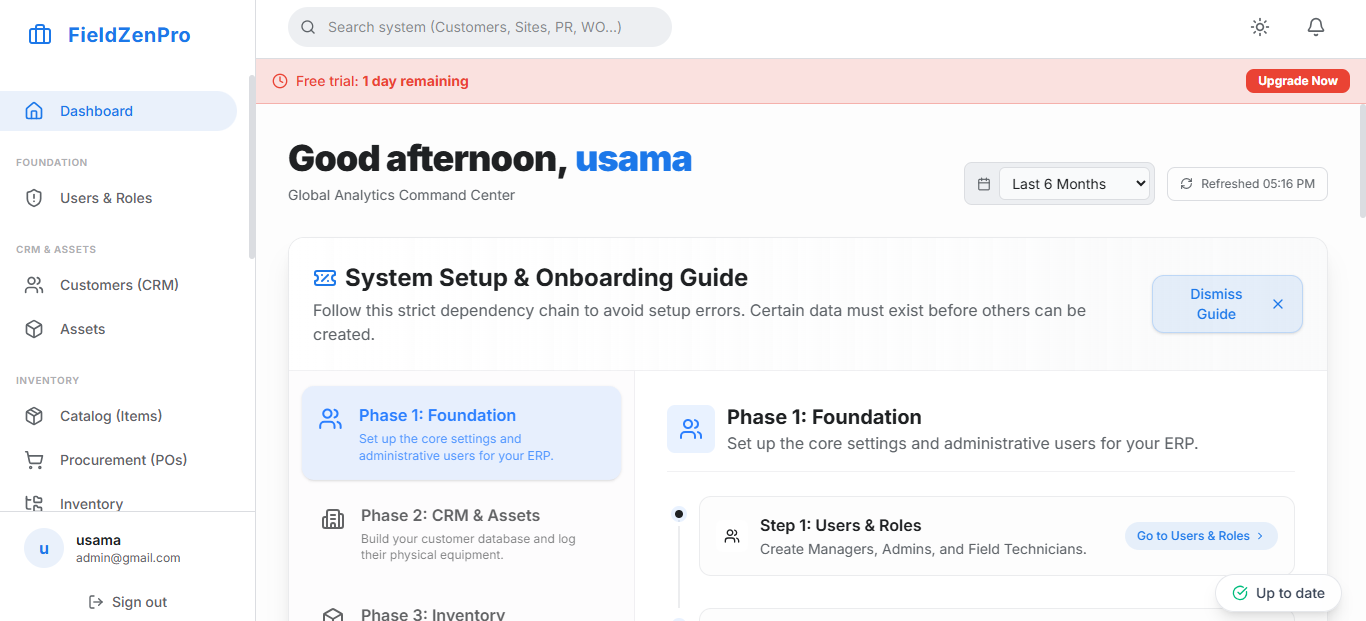
Service management software (SMS) is an umbrella term for platforms that help businesses manage the delivery of services to their customers. More specifically, it refers to software that coordinates the people, assets, and information required to execute service work in the field.
At its most fundamental level, service management software must answer four critical operational questions:
- Who is available to do the work? (Technician scheduling and availability)
- Where does the work need to happen? (Customer location and geographic routing)
- What is needed to complete the work? (Parts, inventory, and equipment)
- How much will the customer be charged? (Quoting, invoicing, and payment)
A platform that cannot answer all four questions with clarity and speed is not truly a service management platform—it is merely a scheduling app or an invoicing tool.
"Truly great service management software doesn't just organize your current operations—it actively reveals new opportunities to increase revenue and reduce costs."
The Core Modules of Service Management Software
Customer Relationship Management (CRM)
A robust CRM is the database that powers all other modules. It stores every customer's contact details, service address, equipment list, service history, and communication preferences. When a customer calls, the dispatcher can pull up their entire profile in seconds, providing a personalized experience. When a technician is dispatched, they have access to the complete service history, allowing them to diagnose recurring issues faster.
Job and Work Order Management
Every service request must be converted into a structured work order. This digital document follows the job through its entire lifecycle—from creation in the office, to dispatch to the technician, to diagnosis in the field, to completion and invoicing. Digital work orders eliminate the data loss and illegibility associated with paper-based systems, ensuring that every job is traceable and auditable.
Dynamic Scheduling and Dispatch
This is the operational heart of the platform. A powerful scheduler presents all available technicians on a visual, map-based interface. Dispatchers can see each technician's GPS location, current job status, and remaining schedule for the day. Assigning new jobs is as simple as dragging a job card onto a technician's timeline. The software automatically calculates the drive time to the next location and fires off a push notification to the technician's mobile device.
Mobile Field App
The service management software is only as valuable as its mobile experience. Technicians need a clean, intuitive application that works equally well at 100% cellular signal or at zero signal. The app must display job details, provide navigation, support photo capture, enable digital quoting, and facilitate on-site payment processing.
Invoicing and Reporting
Once a job is complete, the software should handle the rest automatically. It converts the digital work order into a professional invoice, emails it to the customer, and generates management reports that reveal business performance trends—such as average revenue per technician, job completion rates, and most profitable service types.
Industries That Rely on Service Management Software
While the trades industry (HVAC, plumbing, electrical) represents the largest segment of service management software users, the platform benefits any business that sends people to serve customers on-site:
- Pest control and extermination companies
- Commercial cleaning and janitorial services
- Medical and scientific equipment service providers
- IT managed service providers (MSPs)
- Security system installation and monitoring companies
- Landscaping and lawn care businesses
- Elevator and escalator maintenance firms
Build Your Service Engine with FieldZenPro
FieldZenPro is the most intuitive, comprehensive service management software platform available for growing service businesses. From the first customer phone call to the final invoice payment, every step of your workflow is covered.
Related Articles & Resources
Run Your Service Business Smarter
Discover why thousands of service professionals trust FieldZenPro to manage their operations.
Start Your 14-Day Free Trial