Scheduling Software for Landscaping Business: Grow Your Green Empire
Landscaping is one of the most operationally challenging service industries in existence—and paradoxically one of the last to embrace digital management tools. The combination of weather-dependency, heavy seasonal demand swings, high crew turnover, and a mix of one-time and recurring contracts creates a scheduling environment that is almost impossibly complex to manage with a whiteboard and spreadsheets.
Yet thousands of landscaping business owners are still doing exactly that. They start the week with a plan, and by Tuesday morning, an unexpected storm has washed out three days of mowing schedules that must now be compressed into two days. Crews are scrambling, customers are calling angrily, and the dispatcher is trying to rearrange 40 jobs across six crews using nothing but a dry-erase marker and a prayer.
If this sounds familiar, scheduling software for landscaping business is not a luxury—it is the operational infrastructure you need to survive and grow. This article explores the unique scheduling challenges landscaping companies face and how the right software solves them systematically.
The Unique Scheduling Nightmares of Landscaping
Before we dive into solutions, it's worth cataloguing the specific scheduling challenges that make the landscaping industry unique:
1. Weather-Driven Mass Rescheduling
Rain doesn't just cancel a single appointment—it can wipe out an entire day or week of lawn care services for every client on your roster. In a paper-based system, rescheduling 60 clients after a three-day rain event requires hours of phone calls, manual calendar adjustments, and frantic text messages to crew leaders. The probability of errors during this process is virtually 100%.
2. The Complexity of Recurring Contracts
Unlike emergency service calls, landscaping revenue is built on recurring maintenance contracts. A commercial property might have a weekly mowing contract, a monthly mulching contract, and a quarterly fertilization contract—all managed simultaneously. When a crew lead calls in sick, or a commercial property requests a date change, manually adjusting these recurring schedules without creating a cascade of conflicts is an administrative nightmare.
3. Multi-Crew Coordination Across Properties
Large commercial landscaping jobs—think apartment complexes, corporate campuses, or HOA communities—often require multiple crews working simultaneously at the same property. Coordinating the equipment each crew needs, the specific sections of the property each crew is responsible for, and ensuring they don't block each other's access requires precise, visual scheduling tools.
4. Seasonal Surge Hiring
Every spring, your crew roster doubles as you bring on seasonal workers. These new employees must be added to the scheduling system, assigned to specific crews, and their hours tracked accurately from day one. In a paper system, onboarding a wave of seasonal staff is a chaotic documentation mess.
"In landscaping, you aren't just scheduling jobs—you are scheduling crews, equipment, trailers, and materials across dozens of properties simultaneously, all against a background of completely unpredictable weather."
How Scheduling Software Solves These Problems
One-Click Weather Rescheduling
The most valuable feature of dedicated landscaping scheduling software is mass rescheduling. When a storm rolls in, the dispatcher doesn't need to call every client individually. They select all affected jobs on the visual calendar and drag them forward to available slots. The software automatically sends SMS notifications to every affected customer informing them of the rescheduled date. What used to take three hours of chaos now takes three minutes.
Automated Recurring Job Generation
You set up a client's weekly mowing contract once. The software automatically generates the work order every Monday morning, assigns it to the correct crew, and maps it into the route. If the client requests a date change one week, you modify only that specific instance—all future recurring jobs remain unaffected. The system tracks the status of every contract, alerting you when a seasonal contract is approaching its renewal date.
Crew-Level Scheduling and Geofenced Time Tracking
Landscaping software allows you to schedule at the crew level, not just the individual level. You assign a job to "Crew 3" and the software pushes the job details to the crew leader's mobile app. GPS-enabled geofencing automatically clocks the crew in when they arrive at the property boundary and out when they leave, eliminating paper timesheets and payroll disputes.
Equipment and Trailer Dispatch
Premium scheduling platforms allow you to track equipment—zero-turn mowers, aerators, dethatchers—as assignable resources. You can ensure that a specific large-scale aeration job is only scheduled on a day when Trailer 2 with the commercial aerator is available.
FieldZenPro: Built for Crew-Based Service Businesses
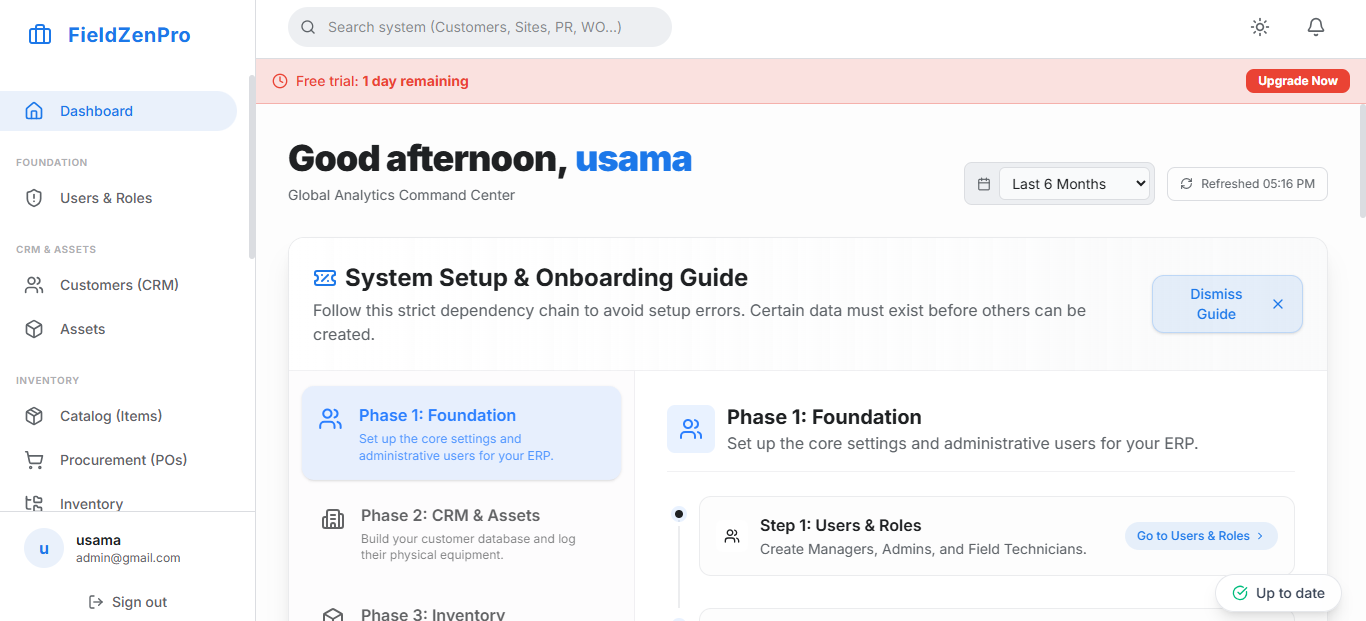
FieldZenPro's scheduling engine was designed to handle the complexity of crew-based service operations. Its dynamic calendar, automated recurring job management, and offline-first mobile app give your crews the clarity they need to execute efficiently every day—rain or shine.
Related Articles & Resources
Take Control of Your Landscaping Schedule
Stop rescheduling by hand. Automate your recurring jobs and weather rescheduling with FieldZenPro.
Start Your 14-Day Free Trial