Field Management System: The Central Nervous System of Your Service Business
Every well-run organism—from the human body to a complex machine—has a central nervous system: a network that transmits information instantaneously between every component so that the whole can function as a coordinated, responsive unit. A human body without this nervous system would be a collection of capable but uncoordinated parts. A service business without a central operating system is exactly the same thing: capable people performing capable work, but without the coordination infrastructure to perform as a unified, high-functioning whole.
A field management system (FMS) is this central nervous system for your service operation. It is the platform through which every piece of operational data flows—customer information, job details, technician locations, inventory levels, financial transactions—creating a real-time, shared picture of the business that every department and every individual technician can act upon.
What "System" Actually Means
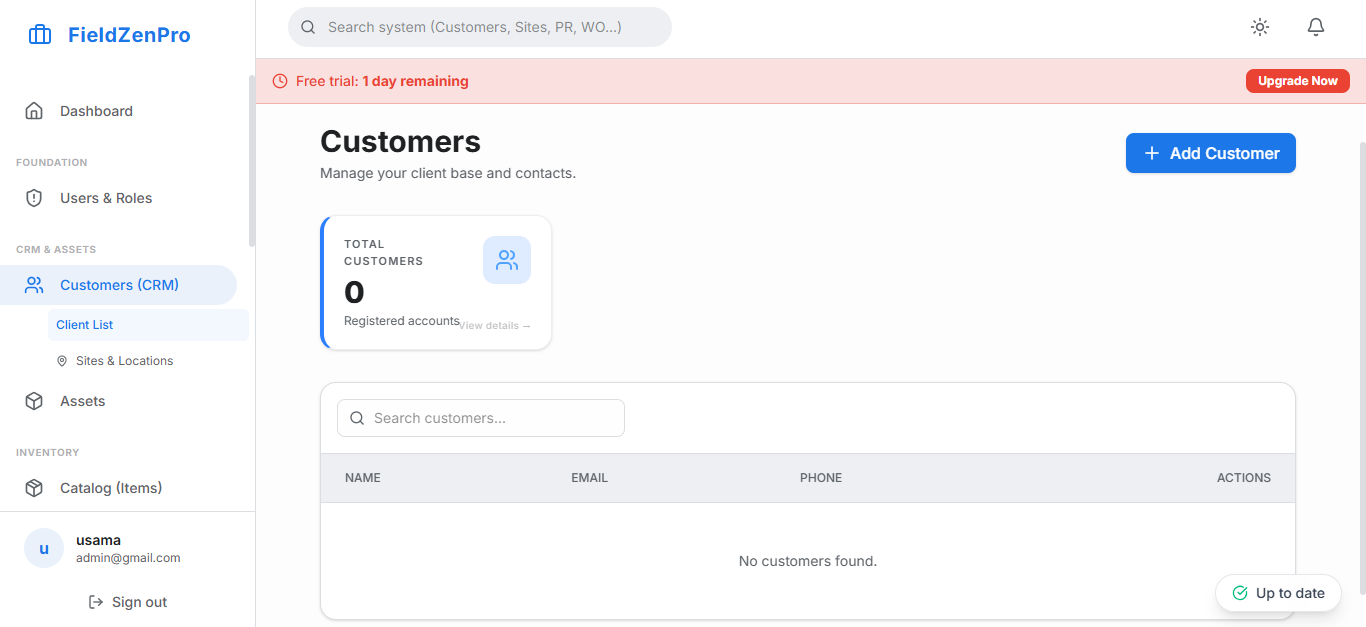
The word "system" is important here. Many service businesses use a collection of separate tools that they have wired together with integrations and manual processes. They have a scheduling app, a separate invoicing tool, a separate CRM, a separate GPS tracking service, and QuickBooks handling the finances. Each tool is connected to the others via scheduled data syncs, Zapier automations, or manual CSV imports.
This is not a field management system—it is a field management patchwork. And like any patchwork, it has seams where things can fall through: sync failures, data formatting mismatches, automations that stop working without notice, and a fundamental inability to perform truly cross-functional queries (like "which technician generates the highest revenue on jobs where a specific type of equipment is involved").
A true field management system is a single application with a single database. Every module—scheduling, dispatch, customer management, work orders, inventory, invoicing, reporting—is native to the platform and shares the same underlying data layer. There are no seams to fail.
"The compounding efficiency gains of a true field management system come not from any single feature, but from the seamless flow of accurate data between every function in the business."
The Architecture of a True Field Management System
The Customer and Asset Database
At the foundation is a comprehensive database of every customer, every service location, and every piece of equipment you have ever serviced. This database is the shared truth that every other module references. When a dispatcher creates a job, they pull from this database. When a technician opens a work order on their mobile app, they are accessing this same database. When the billing team generates an invoice, the customer details come from this database. One truth, universally accessible.
The Scheduling and Dispatch Engine
Built on top of the customer database, the scheduling engine manages the allocation of technician capacity to customer demand. Because it shares the same database as the customer and inventory modules, it can automatically surface job requirements (parts needed, certifications required) and validate that the assigned technician meets them before the assignment is confirmed.
The Mobile Work Order Layer
The technician's mobile experience is not a separate app that syncs periodically with the main system—it is a mobile interface to the same underlying database. When a technician updates a job status on their phone, the dispatch board at headquarters reflects the change in real time. When the office adds a customer note to a job, the technician sees it on their device immediately.
The Financial Layer
When a job is marked complete in the field, the financial layer automatically generates the invoice, applies the correct tax rates, and posts the transaction to the general ledger. When the customer pays, the payment is automatically reconciled against the outstanding invoice. The accounting data is always current, eliminating the end-of-month manual reconciliation nightmare.
The Intelligence Layer
Because all operational and financial data lives in one system, reporting is both comprehensive and instantaneous. The intelligence layer aggregates this data into dashboards and reports that give leadership a real-time view of every metric that matters—without manual data compilation or export-and-analyze workflows.
FieldZenPro: Built as a True System From Day One
FieldZenPro was architected as a unified field management system, not assembled from acquired point-solution products. Every module shares the same single-database foundation. The result is a platform that delivers genuine, compounding efficiency gains—where improvements in one area of the operation cascade automatically into improvements across the entire system.
Related Articles & Resources
- FSM Field Service Management: A Deep Dive Into the Discipline Powering Modern Service Companies
- Service Management Software for Small Business: Compete and Win
- Landscaping Business Software: Route Density and Recurring Billing
- Industry Data: IBISWorld Industry Reports
- Business Resource: Gartner Software Research
Replace Your Patchwork With a True System
Unify your entire operation on one platform and experience the compounding power of a true field management system.
Start Your 14-Day Free Trial